Your cart is currently empty!
The Global New Energy Vehicle Landscape Is Changing
Is Tesla Still the World’s No.1 New Energy Vehicle Brand? The Data Tells a Different Story
For many people, Tesla is still seen as the world’s leading new energy vehicle (NEV) brand.
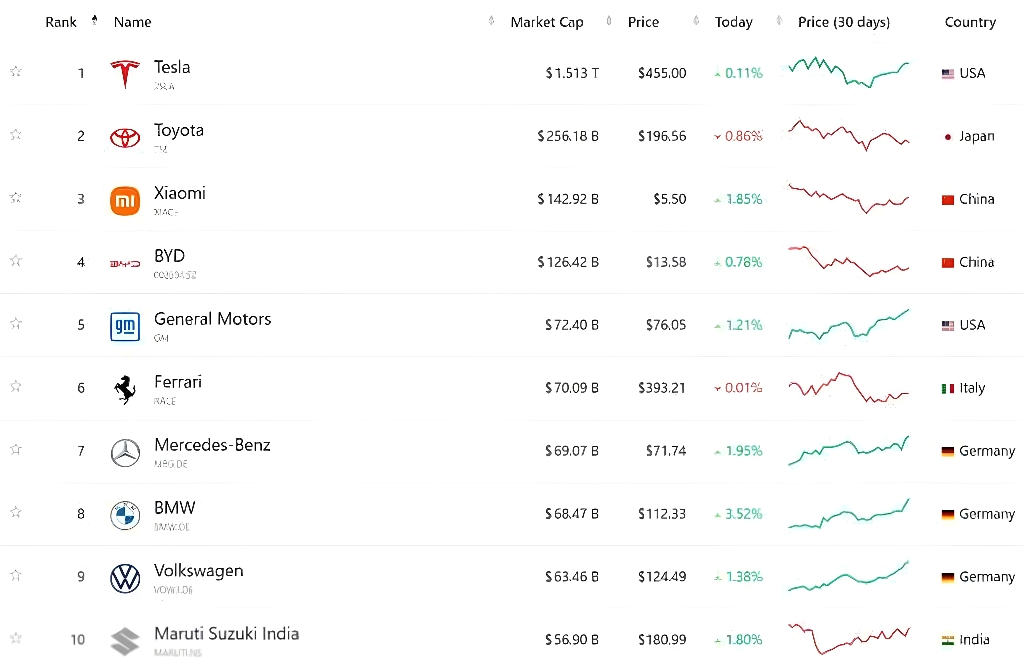
If we talk about market capitalization, that perception is understandable.
With a valuation of around USD 1.51 trillion, Tesla is not only the world’s most valuable NEV brand, but also the most valuable automaker overall — far ahead of competitors such as Toyota, Xiaomi, and BYD.
By comparison, Xiaomi stands at approximately USD 143 billion, and BYD at USD 126 billion, both less than one-tenth of Tesla’s valuation.
However, sales volume tells a very different story.
According to CleanTechnica’s Global EV Brand Sales Ranking for October 2025, Tesla is no longer the global sales leader in the NEV market.
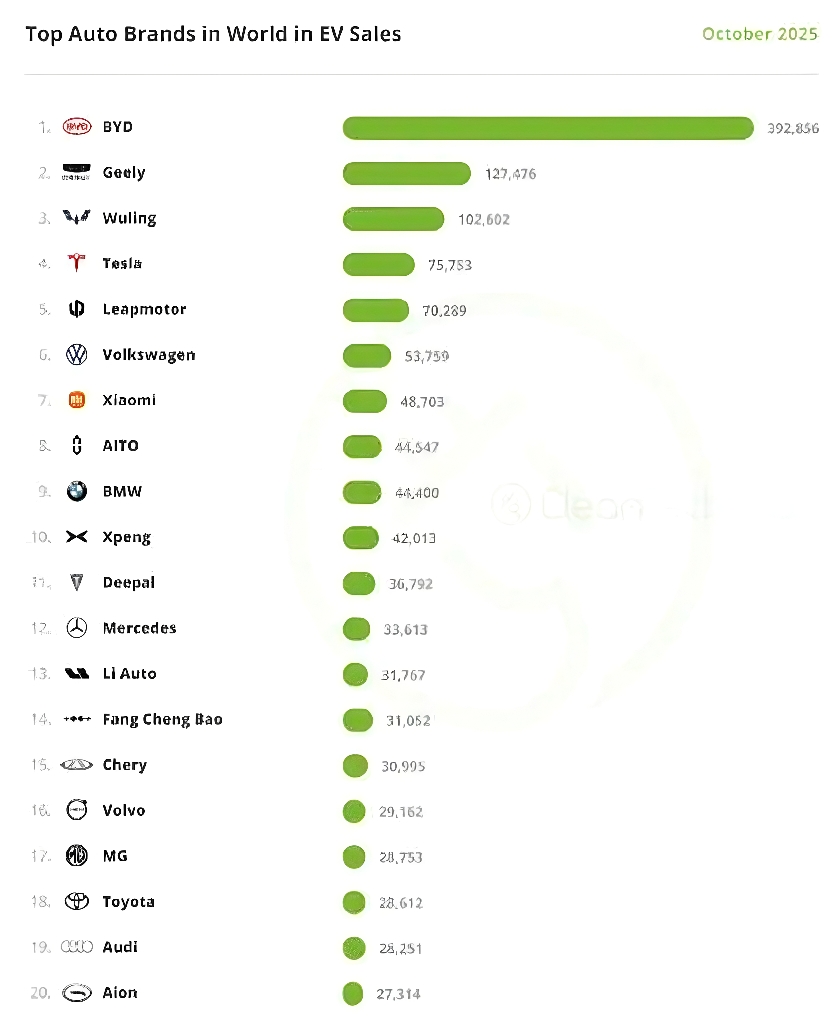
BYD ranked No.1 globally with 393,000 units sold, leading by a wide margin
Geely followed with 127,500 units
Wuling exceeded 100,000 units
Tesla ranked 4th, with 75,800 units sold
Leapmotor followed closely, also surpassing 70,000 units
Other Chinese brands such as Volkswagen (China operations), Xiaomi, and AITO also posted strong sales figures, all approaching or exceeding 45,000 units.
Among the top 10 NEV brands, 7 are Chinese brands.
In the global top 20, 13 brands come from China, highlighting China’s dominant position in today’s NEV market.
Some argue that the comparison is unfair, as Tesla focuses purely on battery electric vehicles (BEVs), while many Chinese brands also sell plug-in hybrids and range-extended EVs.
Looking strictly at BEV-only sales, the trend remains the same.
In Q3 2025 global BEV market share,
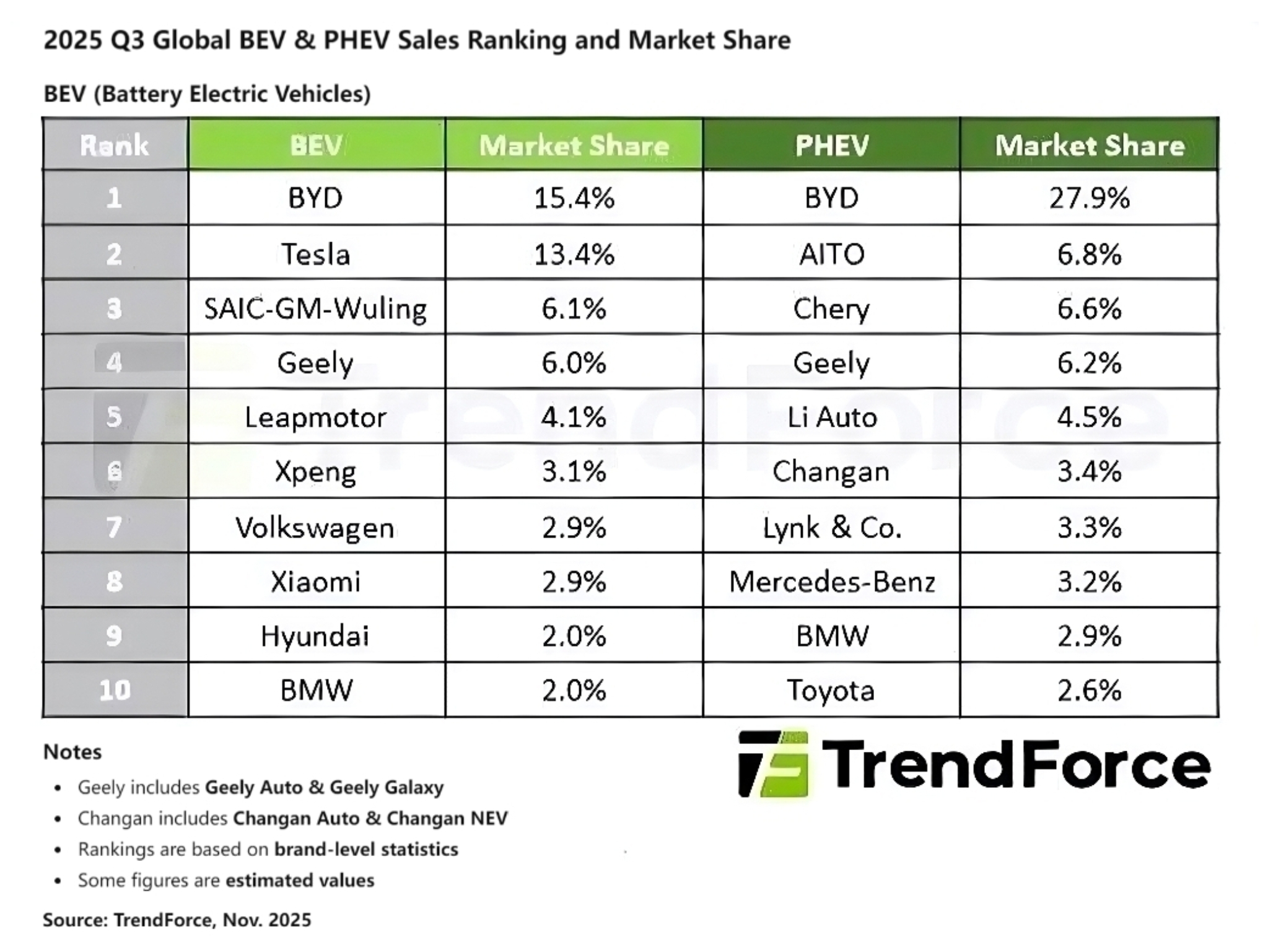
BYD ranked No.1 with 15.4%,
Tesla followed with 13.4%.
Among the top 10 BEV manufacturers, six are Chinese brands.
As for hybrids, the picture is even clearer — the top five brands globally are all Chinese, with overseas competitors struggling to keep pace.
Tesla remains a global leader in brand value and capital markets.
But in terms of real-world sales, product diversity, and market momentum, the global NEV landscape has clearly shifted.
Whether pure electric or hybrid, the future of new energy vehicles is increasingly being shaped by Chinese automakers.
Leave a Reply